





Table of Contents
Excessive underarm sweating and sweaty palms after 40 can make everyday moments feel uncomfortable, from choosing what to wear to shaking hands with confidence. When antiperspirants and topical products are not enough, Botox for controlling excessive underarm and palm sweating offers a targeted way to reduce sweat production in problem areas, helping you feel cleaner, drier, and more in control throughout the day.
Why Underarm Sweat and Sweaty Palms Can Stand Out After 40
Sweating after 40 is not always new, but it can become more noticeable. Hormonal changes, stress patterns, medication changes, and certain health conditions may affect how the body regulates sweat. Some people notice changes around perimenopause or menopause. Others have dealt with sweating for years, but it starts to interfere more with work, social plans, exercise, or clothing choices.
Underarm sweat often creates visible concerns. It can leave marks on shirts, make fabric feel uncomfortable, or limit what someone feels comfortable wearing. Sweaty palms create a different kind of strain. Damp hands can affect handshakes, writing, phone use, steering wheels, fitness equipment, or work tools.
A sudden change in sweating should be discussed with a healthcare provider, especially if it comes with night sweats, fever, unexplained weight change, rapid heartbeat, or fatigue. Hyperhidrosis treatment is most appropriate when the sweating pattern has been reviewed and other possible causes have been considered.
How Botox Helps Calm Overactive Sweat Glands
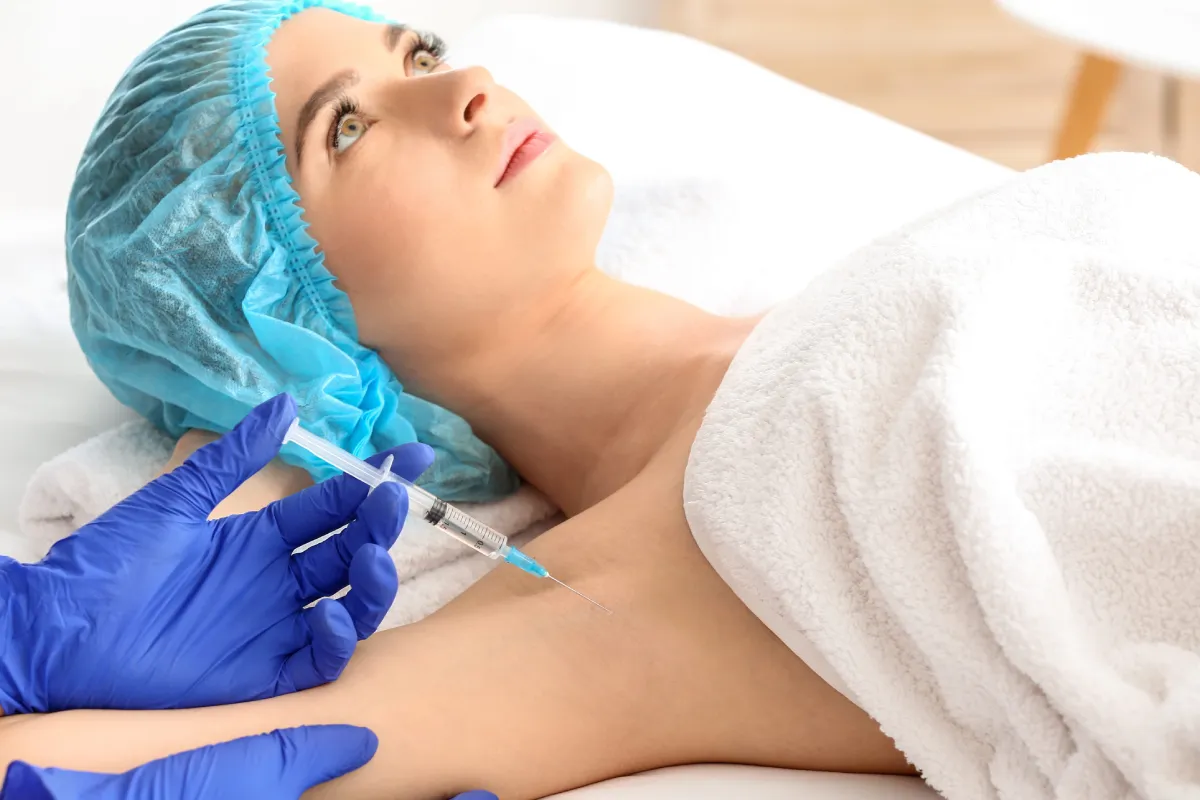
Botox is a neuromodulator. When used for hyperhidrosis, small amounts are placed into the skin across the sweating area. It temporarily blocks the chemical message that tells sweat glands to produce sweat. As that message decreases, the sweat glands in the treated area become less active.
This makes Botox a targeted treatment for overactive sweat glands rather than a treatment that changes sweating everywhere. The body can still sweat from untreated areas. The purpose is to reduce sweating that creates daily problems in the underarms, palms, or another area being evaluated by the provider.
For underarm sweating, the treatment area is usually mapped so injections can be placed where sweating is strongest. Palm treatment requires a more detailed conversation. The palms are sensitive, and injections in this area may cause temporary hand weakness in some patients.
Underarm Sweating: What Botox May Improve
Underarm hyperhidrosis tends to affect clothing and comfort first. People may carry extra shirts, reapply antiperspirant several times, or avoid certain fabrics because sweat marks are hard to hide. Prescription-strength antiperspirants can help some patients, but they may irritate the skin or fall short when sweating is severe.
Botox treatment may reduce the amount of sweat produced in the underarm area. Many patients consider it because they want fewer visible sweat marks, less dampness through clothing, and less worry during long workdays or social events.
Results vary, and the treatment is temporary. Still, patients who respond well may experience long-lasting relief from severe hyperhidrosis symptoms compared with short-term methods that need to be repeated daily.
Sweaty Palms: Small Area, Real Interruption
Palm sweating can feel disruptive because the hands are involved in nearly every interaction. Damp palms may affect work tasks, paperwork, touchscreens, gloves, fitness equipment, and social contact. Some people avoid handshakes or keep tissues nearby because the sweating feels unpredictable.
Botox may help by reducing disruptive palm moisture and sweat buildup. Palm treatment is more detailed than underarm treatment because the area has many nerve endings and small muscles nearby. Comfort measures may be discussed, and the provider should review the possibility of temporary weakness, especially for patients who rely on fine hand strength.
What to Expect During Treatment
A hyperhidrosis appointment is usually straightforward, but it should still feel personal to the patient’s symptoms. The provider will want to understand where the sweating happens, how often it disrupts daily life, and what has already been tried. From there, treatment can be planned around the area being treated, the patient’s comfort level, and the amount of sweat control needed.
- Review of your sweating concerns: The visit typically starts with a conversation about your symptoms. The provider may ask when the sweating started, which areas are most affected, how often it happens, and how it interferes with clothing, work, hand use, or social comfort.
- Discussion of health history: Since sweating can sometimes be related to medications, hormone changes, or certain medical conditions, the provider may review your health history before recommending treatment. This helps make sure Botox is being considered for the right reason.
- Treatment area planning: The provider identifies the area where sweating is most active. For underarms, this may involve mapping the area where sweat tends to show through clothing. For palms, the provider will look at where moisture affects grip, touch, or daily hand use.
- Small injections across the area: Botox is placed into the skin using a series of small injections. The goal is to reach the sweat glands in the targeted area so the nerve signal that triggers excess sweating can be reduced.
- Comfort measures when needed: Underarm treatment is often well tolerated, but palm treatment can feel more sensitive. Depending on the area being treated, the provider may discuss numbing or other comfort options before starting.
- Simple aftercare guidance: Most patients can return to normal routines after the appointment. The provider may recommend avoiding heavy heat exposure, intense exercise, or sauna use for the rest of the day, depending on the treatment plan.
- Gradual results: Sweat reduction does not happen immediately. Many patients begin noticing changes within several days, with fuller improvement developing as Botox takes effect in the treated area.
Is Botox Right for Sweating After 40?
Botox may be worth considering if sweat is affecting clothing, hand use, comfort, or confidence and standard products have not helped enough. Good candidates are typically adults with sweating that is persistent, excessive, and focused in treatable areas.
A consultation is important if sweating is new after 40, has changed suddenly, or appears with other symptoms. For the right patient, Botox can support improving daily comfort and confidence with sweat control without changing the body’s ability to sweat overall. It simply reduces sweat activity where the problem is most disruptive.
Amani Aesthetics Hyperhidrosis Treatment in Artesia, NM
Amani Aesthetics offers hyperhidrosis treatment in Artesia, NM for patients dealing with excessive underarm sweating, sweaty palms, or sweat concerns that affect daily comfort. The visit begins with an evaluation, not assumptions. The provider reviews the sweating pattern, treatment history, medical factors, and the area that bothers the patient most.
Underarm sweating and palm sweating are not treated in exactly the same way. For underarms, the goal may be to reduce visible sweat and clothing concerns. For palms, the goal may include improving grip, reducing moisture during hand use, and helping the patient feel more comfortable in professional or social settings. At Amani Aesthetics, treatment plans are tailored to each patient’s unique concerns and goals. Rejuvenate your mature skin using Botox treatment today while exploring solutions designed to improve both comfort and confidence.
Frequently Asked Questions
Can Botox be used for sweaty palms?
Botox may be used for sweaty palms, but the provider should carefully evaluate the area because palm treatment can be more sensitive and may cause temporary hand weakness.
How long does Botox for hyperhidrosis usually last?
Botox results for hyperhidrosis vary, but many patients experience sweat reduction for several months before maintenance treatment is needed.
How does Botox help with excessive underarm sweating?
Botox helps reduce underarm sweating by temporarily blocking the nerve signals that activate sweat glands in the treated area.
Is hyperhidrosis treatment painful?
Underarm treatment is usually well tolerated, while palm treatment may feel more sensitive and may require comfort measures.